
FREQUENTLY ASKED QUESTIONS
San Diego Beach Bonfire FAQ
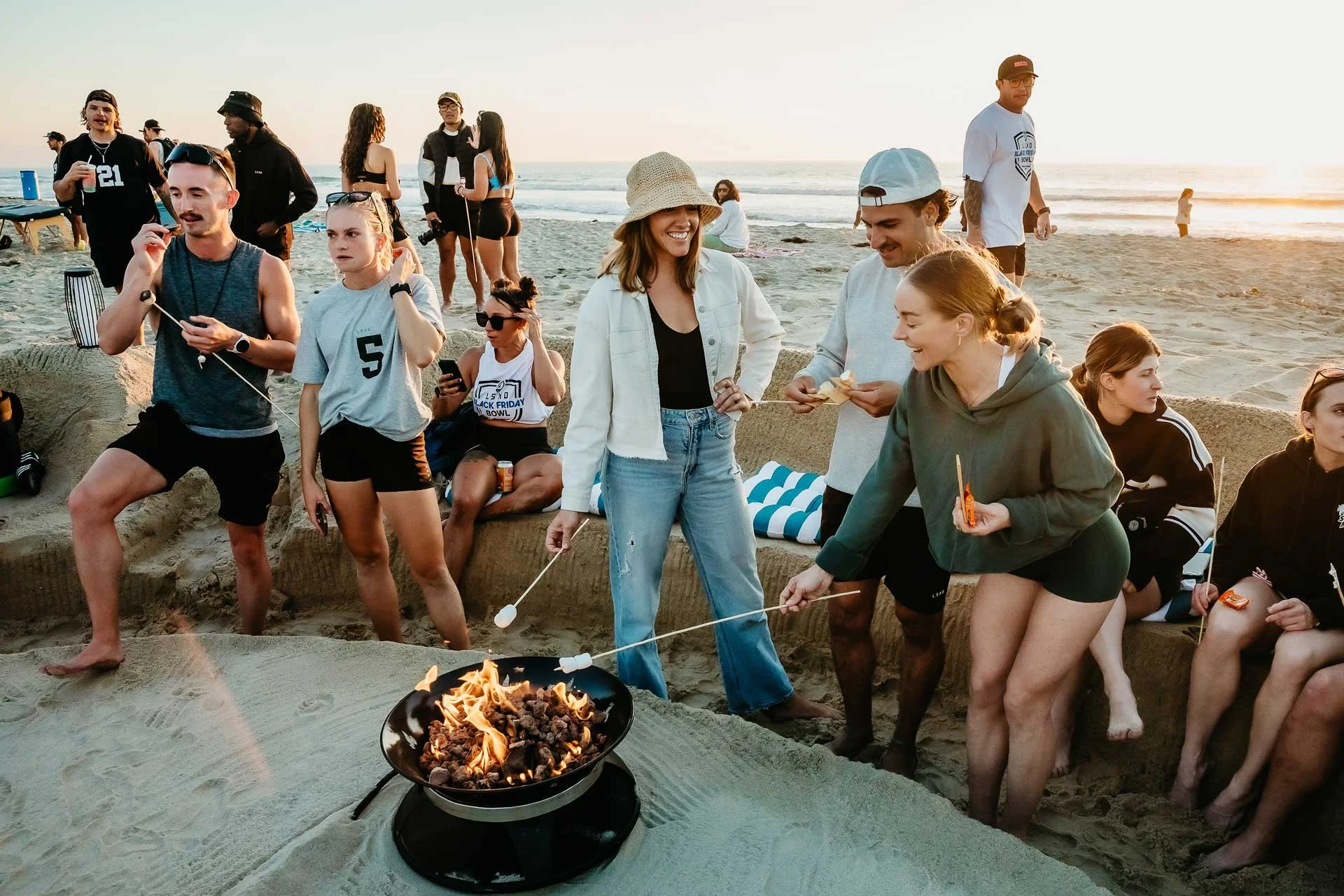
Hosting a beach bonfire in San Diego means sorting out the beach, the food, the seating and the timing on public sand. These are the questions we hear most often about booking one, where we host and what the night looks like, and if yours isn’t here, we’re always happy to talk it through. Permits, cost, deposits and refunds have their own page.
Frequently Asked Questions
Booking a San Diego Beach Bonfire
-
It all starts with a conversation. Send the Book Your Bonfire form on our Contact page with your date and guest count, and if you're not sure which beach fits, choose "Let BluLite recommend." We'll set up a short call to listen to what you have in mind, then send a proposal with your beach, layout, permit plan and full cost, and we hold that proposal for 14 days. To confirm, you sign the event agreement and pay the 50% deposit, and we start on the permit. For Coronado North Beach, you apply for the city permit with our help, and we send your booking link once the permit is approved.
-
The beach is far more than a pile of rocks; it is a living, breathing filter. Every day, the tides push seawater through the sand, which acts as a natural purification system. Traditional wood fires leave behind two lasting residues—ash and charcoal—that disrupt this vital process and the diverse life forms that depend on it.
1. Chemical Alteration: The pH Spike
Wood ash is highly alkaline, containing significant amounts of calcium carbonate and potassium. When left in the sand, it acts as a powerful "liming agent."
The pH Shift: Natural beach sand typically maintains a stable pH. However, wood ash can spike local sand pH to levels as high as 10 or 12 (similar to household ammonia).
The Microscopic Foundation: This chemical shift is devastating for meiofauna—microscopic organisms like tardigrades and nematodes that live in the thin films of water between sand grains. These tiny creatures are the primary cleaners of the sand, and their loss is the first step in a collapsing ecosystem.
2. The Macrofauna Connection: A Food Chain in Peril
The impact on microscopic life has a direct "bottom-up" effect on the larger, more familiar sand dwellers (macrofauna) that we see along the shoreline.
Sensitive Species: Creatures like sand crabs (Emerita analoga), beach hoppers (amphipods), and isopods (rolly pollies) rely on a healthy, pH-balanced environment to survive. When the sand becomes chemically altered, these populations dwindle.
The Ripple Effect: Sand crabs and beach hoppers are the primary food source for shorebirds like plovers and sandpipers, as well as various surf fishes. When the "sand bugs" disappear due to ash leaching, the entire local food web is left without its foundation.
3. Carbon Buildup: Suffocating the Shoreline
Unlike wood, which eventually rots, charcoal is a form of elemental carbon that is virtually indestructible in a beach environment.
The "Black Layer": In areas with frequent wood fires, a dark layer of charcoal and soot builds up beneath the surface. This layer acts as a physical barrier, trapping heat and preventing the natural movement of oxygen and seawater through the sand—effectively "suffocating" the habitat for both meiofauna and macrofauna.
Atmospheric Impact: Every wood fire releases carbon that was previously sequestered (stored) in the tree’s fibers. This contributes to the net increase of CO2 in our atmosphere, unlike propane, which has a significantly lower carbon intensity.
4. Toxic Runoff: From Sand to Sea
The sand isn't a closed system. When the tide rises or it rains, the water "washes" the buried ash and charcoal.
Marine Toxicity: This runoff carries concentrated potassium and heavy metals (like cadmium and nickel found in wood ash) into the nearshore water.
Algal Blooms: High concentrations of phosphorus from ash can trigger localized "micro-blooms" of algae, which deplete oxygen in tide pools and harm sensitive marine plants like eelgrass.
5. The Blulite Difference: Zero Residue
Because propane combustion produces only water vapor and a small amount of CO2, there is zero solid waste left behind. Our specialized hand-sifting process isn't used to clean up after ourselves; it's used to remove the "legacy pollution"—like glass and nails—left by others. We leave the sand’s pH balanced and the habitat safe for everything from the tiniest tardigrade to the nesting plover.
Sources:
Frontiers in Microbiology - Wood Ash Induced pH Changes
NOAA Ocean Exploration - What are Marine Meiofauna?
UCSB Explore Beaches - Sand Dwellers and Their Habitat
LiMPETS - The Importance of Sand Crabs to the Beach Ecosystem
University of New Hampshire - Guide to Wood Ash and Soil Carbon
Propane Education & Research Council - Carbon Intensity Comparisons
Minnesota Sea Grant - Are Wood Fires Harmful to Lakes and Oceans?
-
To many, a piece of wood is just fuel. But on a public beach, the "scrap wood" often used for bonfires—pallets, construction debris, and old fencing—is frequently a delivery system for industrial toxins. When these materials meet high heat, they release a suite of chemicals that were never intended to be inhaled or left in the sand.
1. The Pallet Problem: Heavy Metals and Preservatives
Industrial pallets are often treated to prevent rot and pest infestation during international shipping. While some are heat-treated (marked "HT"), many older or international pallets were treated with Methyl Bromide, a potent pesticide and ozone-depleting substance.
The Combustion Risk: Burning treated wood aerosolizes heavy metals like Chromium, Copper, and Arsenic (found in CCA-treated wood). When inhaled, these metals can cause immediate respiratory irritation and long-term neurological damage.
The Lingering Ash: These metals do not "burn up." They concentrate in the ash. Long after the fire is out, the arsenic and copper remain in the sand, where they can be absorbed through the skin of children playing or leached into the tide.These toxic chemicals enter the food chain through uptake by plants and microorganisms, which are eaten by larger creatures, where they stay stored in their tissues. As larger predators eat thousands of smaller, contaminated prey, those toxins "biomagnify," reaching dangerous concentrations at the top of the food chain, before being caught and landing on your plate.
2. Adhesives and Synthetics: The VOC Threat
Construction scraps like plywood, particle board, or "engineered" wood are held together by formaldehydes and industrial glues.
Aerosolized Toxins: Burning these adhesives releases Volatile Organic Compounds (VOCs) and Formaldehyde, a known human carcinogen. In the confined "micro-climate" of a beach bonfire, these concentrations can spike well above safe breathing limits for the families sitting around the fire.
Dioxin Formation: When wood containing paints, stains, or plastics is burned at the relatively low temperatures of a campfire, it can produce dioxins—highly toxic compounds that persist in the environment and accumulate in the food chain.
3. Pyroaerobiology: Living Hazards in the Smoke
Recent breakthroughs in pyroaerobiology have revealed that smoke is a primary vector for living microorganisms. Contrary to the belief that fire "sterilizes" everything, research shows that convection from fires can launch viable fungal spores and bacteria into the air.
Pathogenic Spores: Studies have identified over 100 unique fungal taxa in smoke samples, including known human pathogens like Aspergillus. These spores can survive the heat of a fire and be inhaled deep into the lungs.
Increased Risk: For individuals with asthma, COPD, or weakened immune systems, inhaling these smoke-borne microbes can lead to serious lung infections, including Coccidioidomycosis (Valley Fever) and severe inflammation.
4. Rotten Wood and "Wet" Smoke
Burning "natural" rotten wood found in backyards or near the shore introduces its own set of problems. Rotten wood has a high moisture content and low density, leading to incomplete combustion.
The "Dirty" Burn: This results in significantly higher levels of Carbon Monoxide and thick, "wet" smoke that stays low to the ground. This smoke lingers in the "breathing zone" of guests and nearby residents rather than dispersing.
Biological Irritants: The high concentration of mold and fungal components in decaying wood increases the allergen load of the smoke, often triggering "wood-smoker's lung" (hypersensitivity pneumonitis) in sensitive individuals.
5. Physical Hazards: The Nail and Staple Legacy
Beyond the invisible chemistry is the physical danger left in the ash. A single shipping pallet is held together by roughly 75 to 100 industrial nails or staples.
The Sifting Challenge: When the wood burns away, these metal fasteners—often rusted or sharpened by the heat—remain buried in the sand.
Tetanus and Injury Risk: Traditional "cleanup" usually involves removing the unburned logs, but it leaves the metal behind. This creates a permanent hazard for barefoot beachgoers and local wildlife. At Blulite, our hand-sifting process is specifically designed to catch these industrial "fingerprints" that wood fires leave behind.
6. The Blulite Standard: 100% Clean Energy
By using propane, we bypass the "chemistry of the unknown." We don't have to worry about what was sprayed on a pallet or what mold is growing in a log. Propane provides a consistent, high-temperature, clean-burning flame that leaves the air pure and the sand free of toxic ash and rusted metal.
Sources:
U.S. EPA - Chemicals Found in Pressure-Treated Wood
Journal of Hazardous Materials - Heavy Metal Emissions from Treated Wood Combustion (2025)
U.S. Environmental Protection Agency (EPA). "Toxics in the Food Web."
World Health Organization (WHO) - Dioxins and Their Effects on Human Health
American Lung Association - Toxic Air Pollutants
Eos/Science News - Fungal Spores in Wildfire Smoke (2025)
Journal of Science - Wildfire Smoke and the Living Component of Air Pollution
Canadian Lung Association - Residential Wood Burning Risks
California State Parks - Beach Safety and Fire Ring Regulations
-
Item description
-
Item description
-
Item description
-
Item description
-
Item description
Questions about permits, lead times, cost, deposits and refunds are answered on the beach bonfire permits and fees page.
Jump to:
Permits Costs & Payments
Money and paperwork questions have their own page.
Did We Miss Your Question?
Tell us your preferred date and how many people you expect, or send the question we didn't answer, and we'll help you plan the rest.
Where We Host Beach Bonfires?
-
It all starts with a conversation. Send the Book Your Bonfire form on our Contact page with your date and guest count, and if you're not sure which beach fits, choose "Let BluLite recommend." We'll set up a short call to listen to what you have in mind, then send a proposal with your beach, layout, permit plan and full cost, and we hold that proposal for 14 days. To confirm, you sign the event agreement and pay the 50% deposit, and we start on the permit. For Coronado North Beach, you apply for the city permit with our help, and we send your booking link once the permit is approved.
-
The beach is far more than a pile of rocks; it is a living, breathing filter. Every day, the tides push seawater through the sand, which acts as a natural purification system. Traditional wood fires leave behind two lasting residues—ash and charcoal—that disrupt this vital process and the diverse life forms that depend on it.
1. Chemical Alteration: The pH Spike
Wood ash is highly alkaline, containing significant amounts of calcium carbonate and potassium. When left in the sand, it acts as a powerful "liming agent."
The pH Shift: Natural beach sand typically maintains a stable pH. However, wood ash can spike local sand pH to levels as high as 10 or 12 (similar to household ammonia).
The Microscopic Foundation: This chemical shift is devastating for meiofauna—microscopic organisms like tardigrades and nematodes that live in the thin films of water between sand grains. These tiny creatures are the primary cleaners of the sand, and their loss is the first step in a collapsing ecosystem.
2. The Macrofauna Connection: A Food Chain in Peril
The impact on microscopic life has a direct "bottom-up" effect on the larger, more familiar sand dwellers (macrofauna) that we see along the shoreline.
Sensitive Species: Creatures like sand crabs (Emerita analoga), beach hoppers (amphipods), and isopods (rolly pollies) rely on a healthy, pH-balanced environment to survive. When the sand becomes chemically altered, these populations dwindle.
The Ripple Effect: Sand crabs and beach hoppers are the primary food source for shorebirds like plovers and sandpipers, as well as various surf fishes. When the "sand bugs" disappear due to ash leaching, the entire local food web is left without its foundation.
3. Carbon Buildup: Suffocating the Shoreline
Unlike wood, which eventually rots, charcoal is a form of elemental carbon that is virtually indestructible in a beach environment.
The "Black Layer": In areas with frequent wood fires, a dark layer of charcoal and soot builds up beneath the surface. This layer acts as a physical barrier, trapping heat and preventing the natural movement of oxygen and seawater through the sand—effectively "suffocating" the habitat for both meiofauna and macrofauna.
Atmospheric Impact: Every wood fire releases carbon that was previously sequestered (stored) in the tree’s fibers. This contributes to the net increase of CO2 in our atmosphere, unlike propane, which has a significantly lower carbon intensity.
4. Toxic Runoff: From Sand to Sea
The sand isn't a closed system. When the tide rises or it rains, the water "washes" the buried ash and charcoal.
Marine Toxicity: This runoff carries concentrated potassium and heavy metals (like cadmium and nickel found in wood ash) into the nearshore water.
Algal Blooms: High concentrations of phosphorus from ash can trigger localized "micro-blooms" of algae, which deplete oxygen in tide pools and harm sensitive marine plants like eelgrass.
5. The Blulite Difference: Zero Residue
Because propane combustion produces only water vapor and a small amount of CO2, there is zero solid waste left behind. Our specialized hand-sifting process isn't used to clean up after ourselves; it's used to remove the "legacy pollution"—like glass and nails—left by others. We leave the sand’s pH balanced and the habitat safe for everything from the tiniest tardigrade to the nesting plover.
Sources:
Frontiers in Microbiology - Wood Ash Induced pH Changes
NOAA Ocean Exploration - What are Marine Meiofauna?
UCSB Explore Beaches - Sand Dwellers and Their Habitat
LiMPETS - The Importance of Sand Crabs to the Beach Ecosystem
University of New Hampshire - Guide to Wood Ash and Soil Carbon
Propane Education & Research Council - Carbon Intensity Comparisons
Minnesota Sea Grant - Are Wood Fires Harmful to Lakes and Oceans?
-
To many, a piece of wood is just fuel. But on a public beach, the "scrap wood" often used for bonfires—pallets, construction debris, and old fencing—is frequently a delivery system for industrial toxins. When these materials meet high heat, they release a suite of chemicals that were never intended to be inhaled or left in the sand.
1. The Pallet Problem: Heavy Metals and Preservatives
Industrial pallets are often treated to prevent rot and pest infestation during international shipping. While some are heat-treated (marked "HT"), many older or international pallets were treated with Methyl Bromide, a potent pesticide and ozone-depleting substance.
The Combustion Risk: Burning treated wood aerosolizes heavy metals like Chromium, Copper, and Arsenic (found in CCA-treated wood). When inhaled, these metals can cause immediate respiratory irritation and long-term neurological damage.
The Lingering Ash: These metals do not "burn up." They concentrate in the ash. Long after the fire is out, the arsenic and copper remain in the sand, where they can be absorbed through the skin of children playing or leached into the tide.These toxic chemicals enter the food chain through uptake by plants and microorganisms, which are eaten by larger creatures, where they stay stored in their tissues. As larger predators eat thousands of smaller, contaminated prey, those toxins "biomagnify," reaching dangerous concentrations at the top of the food chain, before being caught and landing on your plate.
2. Adhesives and Synthetics: The VOC Threat
Construction scraps like plywood, particle board, or "engineered" wood are held together by formaldehydes and industrial glues.
Aerosolized Toxins: Burning these adhesives releases Volatile Organic Compounds (VOCs) and Formaldehyde, a known human carcinogen. In the confined "micro-climate" of a beach bonfire, these concentrations can spike well above safe breathing limits for the families sitting around the fire.
Dioxin Formation: When wood containing paints, stains, or plastics is burned at the relatively low temperatures of a campfire, it can produce dioxins—highly toxic compounds that persist in the environment and accumulate in the food chain.
3. Pyroaerobiology: Living Hazards in the Smoke
Recent breakthroughs in pyroaerobiology have revealed that smoke is a primary vector for living microorganisms. Contrary to the belief that fire "sterilizes" everything, research shows that convection from fires can launch viable fungal spores and bacteria into the air.
Pathogenic Spores: Studies have identified over 100 unique fungal taxa in smoke samples, including known human pathogens like Aspergillus. These spores can survive the heat of a fire and be inhaled deep into the lungs.
Increased Risk: For individuals with asthma, COPD, or weakened immune systems, inhaling these smoke-borne microbes can lead to serious lung infections, including Coccidioidomycosis (Valley Fever) and severe inflammation.
4. Rotten Wood and "Wet" Smoke
Burning "natural" rotten wood found in backyards or near the shore introduces its own set of problems. Rotten wood has a high moisture content and low density, leading to incomplete combustion.
The "Dirty" Burn: This results in significantly higher levels of Carbon Monoxide and thick, "wet" smoke that stays low to the ground. This smoke lingers in the "breathing zone" of guests and nearby residents rather than dispersing.
Biological Irritants: The high concentration of mold and fungal components in decaying wood increases the allergen load of the smoke, often triggering "wood-smoker's lung" (hypersensitivity pneumonitis) in sensitive individuals.
5. Physical Hazards: The Nail and Staple Legacy
Beyond the invisible chemistry is the physical danger left in the ash. A single shipping pallet is held together by roughly 75 to 100 industrial nails or staples.
The Sifting Challenge: When the wood burns away, these metal fasteners—often rusted or sharpened by the heat—remain buried in the sand.
Tetanus and Injury Risk: Traditional "cleanup" usually involves removing the unburned logs, but it leaves the metal behind. This creates a permanent hazard for barefoot beachgoers and local wildlife. At Blulite, our hand-sifting process is specifically designed to catch these industrial "fingerprints" that wood fires leave behind.
6. The Blulite Standard: 100% Clean Energy
By using propane, we bypass the "chemistry of the unknown." We don't have to worry about what was sprayed on a pallet or what mold is growing in a log. Propane provides a consistent, high-temperature, clean-burning flame that leaves the air pure and the sand free of toxic ash and rusted metal.
Sources:
U.S. EPA - Chemicals Found in Pressure-Treated Wood
Journal of Hazardous Materials - Heavy Metal Emissions from Treated Wood Combustion (2025)
U.S. Environmental Protection Agency (EPA). "Toxics in the Food Web."
World Health Organization (WHO) - Dioxins and Their Effects on Human Health
American Lung Association - Toxic Air Pollutants
Eos/Science News - Fungal Spores in Wildfire Smoke (2025)
Journal of Science - Wildfire Smoke and the Living Component of Air Pollution
Canadian Lung Association - Residential Wood Burning Risks
California State Parks - Beach Safety and Fire Ring Regulations
-
Item description
-
Item description
-
Item description
-
Item description
-
Item description